
Custom NGO Website Development in India: Complete 2026 Guide
Why generic brochure templates fail Indian non-profits, and how custom web engineering: combining lightweight WordPress architecture, Razorpay UPI checkouts, automated 80G tax receipt pipelines, and sub-second mobile page loads: empowers trusts and societies to maximize donor trust and CSR grant conversions in 2026.
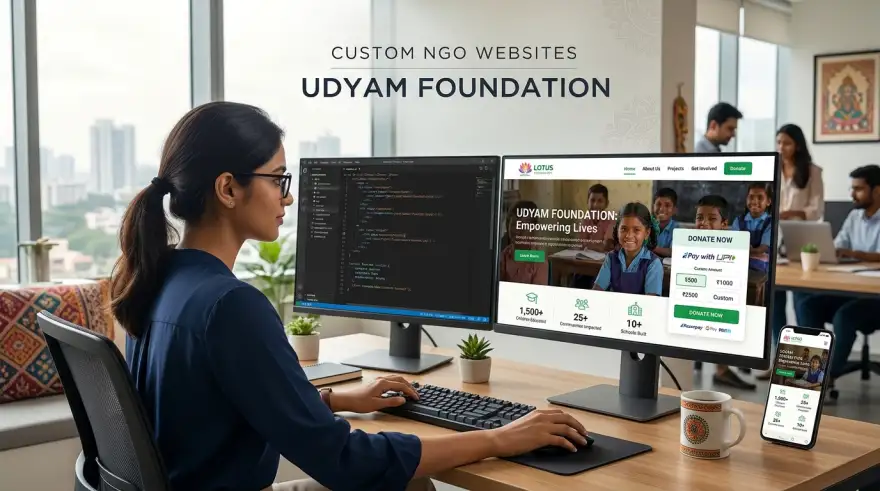
1. The Death of Cookie-Cutter Templates for Indian Non-Profits
Many charitable organizations begin their digital journey by purchasing off-the-shelf commercial theme templates from international marketplaces or relying on well-meaning amateur volunteers. While cheap initially, these generic templates invariably fail Indian non-profits within six months of deployment.
The reasons are rooted in the unique operational and statutory realities of the Indian social sector:
- Code Bloat & Sluggish Page Speed: Generic themes bundle dozens of unneeded plugins, heavy JavaScript libraries, and complex visual sliders that cause page load times to exceed 6 to 9 seconds on mobile devices.
- Inability to Handle Indian Statutory Workflows: Global templates have zero concept of Section 12A/80G approvals, NITI Aayog Darpan IDs, mandatory donor PAN verification, or Central Board of Direct Taxes (CBDT) Form 10BD requirements.
- High Donation Abandonment: Redirecting donors to clunky third-party shopping cart checkouts causes over 65% drop-off rates on mobile viewports.
Custom non-profit web engineering eliminates these bottlenecks by building a streamlined, purpose-driven digital infrastructure from the ground up.
2. Core Architecture of a High-Trust NGO Website
A high-converting non-profit website balances aesthetic dignity with institutional transparency. Every custom deployment should incorporate four foundational pillars:
The 4 Essential Credibility Pillars:
- Statutory Verification Bar: Prominently display registration numbers (Trust/Society/Section 8), 12A and 80G URNs, and Darpan ID in the header and footer with direct verification links.
- Granular Financial Transparency Archive: Provide 1-click access to at least 3 years of audited balance sheets, CA audit reports (Form 10B/10BB), and annual activity narratives.
- Outcome-Driven Cause Pages: Replace vague appeals with quantified community impacts (e.g., “₹2,500 funds educational kits for 3 rural students for a full academic year”).
- Rights-Based Storytelling: Frame community members with dignity and empowerment rather than using distressing imagery that violates beneficiary privacy under the DPDP Act 2023.
3. Frictionless On-Site Razorpay UPI & Payment Gateway Setup
Over 80% of retail philanthropic giving in India happens via Unified Payments Interface (UPI apps like Google Pay, PhonePe, Paytm, and BHIM). Forcing donors to leave your domain for an external payment page destroys donor confidence.
In custom web development, we implement native, on-site Razorpay and Cashfree SDK embeds that provide:
- 1-Click Mobile UPI Intent: On smartphones, tapping “Donate Now” automatically opens the donor’s installed UPI app without manual VPA entry.
- Dynamic Desktop QR Codes: Desktop visitors scan an auto-expiring on-screen QR code using their phone camera for frictionless completion.
- Mandatory PAN Capture: Clean validation requiring a 10-character alphanumeric PAN format, with clear explanation that PAN is required for Section 80G tax deductions.
Read our full technical breakdown in our NGO Payment Gateway Integration Guide.
4. Engineering the Instant 80G PDF & Form 10BD Pipeline
Custom website development connects the checkout experience directly to back-office statutory workflows. Instead of manually creating Word document receipts weeks later, custom event-driven webhooks automate the entire process:
- Payment gateway triggers a secure webhook upon successful payment authorization.
- The server generates a sequential 80G tax receipt PDF stamped with organizational seal, trustee signature, and statutory URNs.
- The PDF receipt is instantly dispatched to the donor’s WhatsApp and email within 30 seconds.
- The transaction is recorded in a secure database table pre-formatted for annual Form 10BD electronic filing.
5. Performance Engineering: Core Web Vitals on Indian 4G Networks
In tier-2 and tier-3 Indian districts, donors and CSR evaluators browse websites on budget smartphones over fluctuating mobile networks. A delay of 2 seconds causes mobile bounce rates to double.
To guarantee sub-second page loads, custom NGO websites implement:
- Modern WebP / AVIF Image Compression: All campaign banners and beneficiary photos are converted to lightweight WebP format (strictly under 100 KB) with explicit dimensions to prevent Cumulative Layout Shift (CLS).
- Server-Level LiteSpeed Caching: Dynamic WordPress pages are cached at the server level, delivering TTFB (Time to First Byte) under 300ms across India.
- Zero Render-Blocking Scripts: CSS and critical scripts are inlined, with non-essential tracking scripts deferred until after Largest Contentful Paint (LCP).
6. CMS Evaluation: Clean WordPress vs Jamstack vs Proprietary SaaS
When selecting a content management system, non-profit leadership must weigh long-term autonomy against technical maintenance costs:
1. Clean WordPress Architecture (Recommended for 90% of NGOs)
Using an ultra-lightweight theme (Hello Elementor) with custom-coded widgets eliminates bloat while granting non-technical NGO staff complete control to post press releases, field updates, and annual reports without paying developer fees.
7. DPDP Act 2023 & Ethical Field Data Safeguards
Under India’s Digital Personal Data Protection Act 2023, non-profits face strict legal liability as Data Fiduciaries. Custom websites implement consent management popups, encrypted database storage for donor PAN numbers, and strict protection of children’s identities in field stories.
8. 10-Point Technical Pre-Launch Checklist
- End-to-End SSL / TLS 1.3: Ensure all pages and checkout forms load over HTTPS.
- Razorpay Live Webhook Test: Complete a live ₹10 test transaction verifying automated receipt generation.
- Form 10BD Export Verification: Confirm transaction logs contain valid PAN, full name, and address.
- Mobile Responsiveness: Test donation flows on iOS, Android, and budget 4G smartphones.
- Core Web Vitals: Verify LCP is under 2.5s and CLS is under 0.1 on Google PageSpeed Insights.
- Automated Cloud Backups: Schedule nightly offsite database backups to AWS S3 / Cloudflare R2.
- Statutory Disclosures: Check that 12A/80G URNs and Darpan ID links are active in footer.
- SEO XML Sitemaps: Submit sitemaps to Google Search Console and Bing Webmaster Tools.
- Legal Policies: Publish DPDP-compliant Privacy Policy, Terms of Use, and Refund Policies.
- Staff CMS Training: Provide NGO program managers with documented editing tutorials.
9. Frequently Asked Questions (FAQs)
Q1: How long does custom NGO website development take?
A standard custom non-profit website with payment gateway integration, automated 80G receipts, and statutory transparency sections typically takes 2 to 4 weeks from content finalization to public launch.
Q2: Can non-technical NGO staff update content after launch?
Yes. By utilizing a clean visual editor on top of clean custom code, NGO program officers can easily publish campaign updates, upload annual reports, and add event photos without touching raw code.
Q3: How does custom development improve CSR funding chances?
Corporate CSR committees conduct strict digital due diligence before releasing funds. A fast, compliant website displaying audited financials, Form CSR-1 registration, and active Darpan credentials signals governance maturity, dramatically accelerating CSR due diligence.