
How to engineer high-trust website architecture for Indian non-profits, trusts, and foundations. Discover mobile UX frameworks, statutory transparency hubs, ethical storytelling standards, and conversion-optimized donation interfaces in 2026.
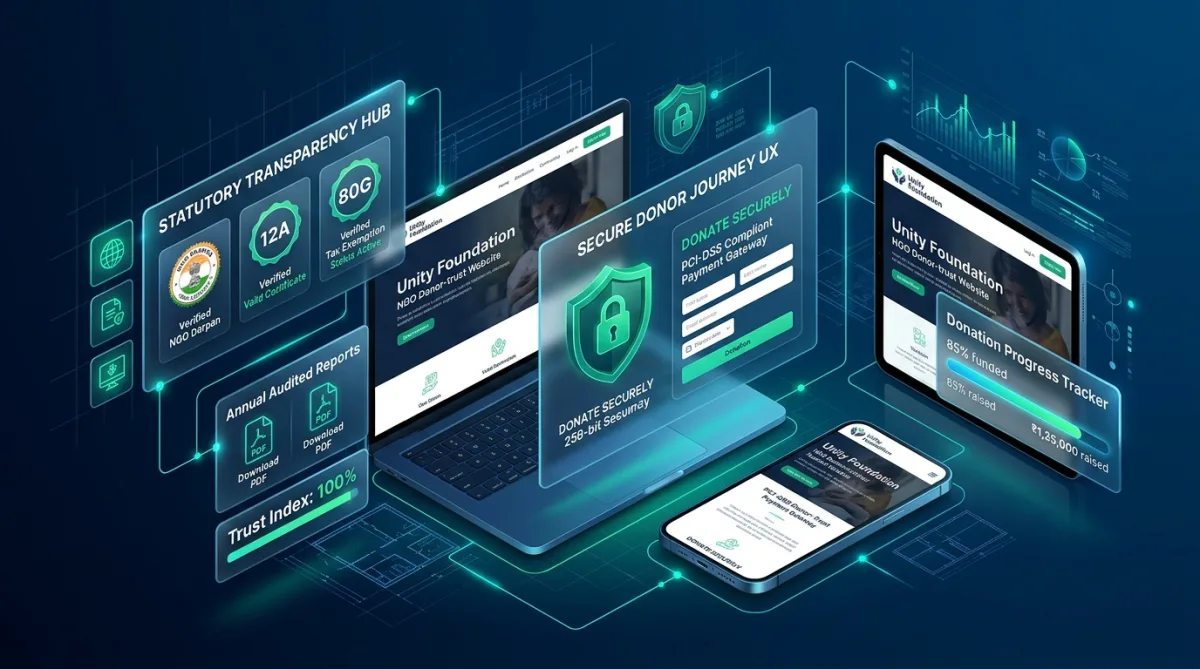
1. The Psychology of Digital Giving in India: Navigating Skepticism
Unlike commercial e-commerce where the buyer receives an immediate physical product in return for money, charitable giving is an intangible transaction rooted entirely in trust, moral conviction, and perceived impact.
In India, retail donors face a constant barrage of sensationalist social media appeals, fake donation QR codes, and news reports on regulatory crackdowns. As a result, modern donors arrive at your website in an inherently skeptical state of mind. They ask four critical questions:
- Is this organization legitimately registered with statutory Indian authorities?
- How much of my ?1,000 actually reaches the field vs being lost to overhead?
- Will I receive an authentic, instant 80G tax receipt for my income tax filing?
- Is my payment and personal phone number secure from spam and misuse?
If your website architecture does not answer all four questions within the first 15 seconds of interaction, the prospective donor leaves and never returns.
2. The 4 Essential Architectural Zones of a High-Trust NGO Website
To convert skeptical visitors into enthusiastic recurring supporters, your information architecture must be organized into four clear structural zones:
Zone 1: The Credibility Header
Positioned at the top of every page. Prominently highlights the 80G Tax Exemption badge, NITI Aayog Darpan ID, and direct links to audited disclosures alongside prominent “Donate Now (80G)” and “WhatsApp Support” buttons.
Zone 2: The Outcome Engine
Replaces vague mission statements with real-time, verified social metrics: verified lives impacted, rural schools supported, saplings planted, or malnutrition recoveries recorded with transparent methodology notes.
Zone 3: The Statutory Transparency Hub
A dedicated, permanent public archive providing 1-click downloadable 80G approval orders, 12A certificates, Form CSR-1 registrations, FCRA disclosures, and the past 3+ years of audited balance sheets.
Zone 4: The Frictionless Checkout
A streamlined, single-screen donation interface supporting instant UPI Intent, auto-generating 80G receipts via n8n automated pipelines, and capturing mandatory PAN details for Form 10BD compliance.
3. Building the Statutory Transparency Hub (Darpan, 12A/80G, Audits)
Corporate CSR committees and institutional grantmakers review your transparency hub before ever releasing capital. Read our deep-dive on CSR Funding for Indian NGOs.
Mandatory Public Downloads for High-Trust NGOs:
- NITI Aayog NGO Darpan Registration: Display your unique Darpan ID alongside a direct verification link to the official NITI Aayog NGO Darpan Portal.
- Section 12A & 80G Certificates: High-resolution downloadable PDF copies of CBDT approval orders with valid Unique Registration Numbers (URN).
- MCA Form CSR-1 Certificate: Official approval certificate enabling legal receipt of corporate CSR funds under Section 135.
- Past 3-5 Years Audited Balance Sheets: Complete financial statements with independent chartered accountant notes, schedules, and receipts & payments accounts.
- Board Member & Leadership Disclosures: Full names, professional designations, and brief biographies of trustees and key executive officers.
4. Mobile-First UX Architecture & Bandwidth Optimization
Over 82% of all visits to Indian non-profit websites occur on mobile smartphones operating across varying bandwidth environments. Optimizing for mobile is not an aesthetic luxury; it directly dictates donation revenue.
Mobile UX Best Practices for Non-Profits:
- Sub-2 Second Page Loads: Compress images to next-gen WebP/AVIF formats and leverage edge caching (LiteSpeed Cache + Cloudflare) to ensure pages load rapidly even on tier-3 mobile networks.
- Sticky Bottom Action Bar: Keep a fixed, non-intrusive action bar visible at the bottom of the mobile viewport with two buttons: “Donate Now (80G)” and “WhatsApp Us”.
- Thumb-Friendly Touch Targets: Ensure all interactive buttons, donation amount selectors, and form fields are at least 48px by 48px to prevent accidental taps.
- Native UPI Integration: Seamless integration with Google Pay, PhonePe, Paytm, and BHIM allowing donors to complete transactions in 2 taps without typing 16-digit card numbers. Read our complete guide on NGO Website Design in India.
5. Dignity-First Storytelling & DPDP Act Compliance
Professional social work ethics require that non-profit digital content respects beneficiary agency and autonomy. The practice of “poverty porn”-exploiting distressing, vulnerable imagery of impoverished individuals to elicit pity donations-is both ethically reprehensible and legally risky.
DPDP Act 2023 Compliance Notice
Under India’s Digital Personal Data Protection Act, non-profits must secure documented, informed consent before capturing or publishing beneficiary imagery, case histories, or locations online. Publishing identifiable information of minors or sensitive health records can incur statutory fines up to ?250 Crores.
Always frame beneficiary stories around their strength, leadership, and resilience. Learn more in our Community Mobilization Guide.
6. WCAG 2.1 AA Accessibility & Multi-Lingual Inclusion
An organization dedicated to social equity must ensure its digital doors are accessible to everyone, including senior citizens, individuals with visual impairments, and regional language speakers:
- Color Contrast Ratios: Maintain at least a 4.5:1 contrast ratio between text and background colors for effortless legibility in bright Indian outdoor sunlight.
- Screen Reader Optimization: Provide detailed
altattributes on all campaign photographs and descriptive labels for form inputs. - Multi-Lingual Capabilities: Support regional Indian languages (Hindi, Marathi, Tamil, Bengali, Telugu) so grassroots community members and regional donors can interact in their mother tongue.
7. Technical Security Hardening & Zero-Trust Forms
Non-profits are frequent targets for automated bot attacks, donation card-testing fraud, and contact form spam. Essential hardening measures include:
- Invisible reCAPTCHA v3 or Cloudflare Turnstile: Blocks automated spam bots from flooding inquiry forms without frustrating human donors with puzzle captchas.
- Strict Transport Security (HSTS): Enforces TLS 1.3 encryption across all subdomains to protect donor credentials.
- Rate Limiting & Anti-Carding Shields: Restricts the number of failed transaction attempts per IP address to eliminate credit card testing fraud on payment gateways.
- Automated Nightly Cloud Backups: Maintains encrypted, off-site backups stored securely on independent cloud infrastructure with 1-click restore capability.
8. Frequently Asked Questions (FAQs)
Q1: How does website architecture directly affect our donation conversion rate?
Friction directly kills donor intent. Every extra form field, slow page redirect, or missing statutory badge reduces donation completion rates by 15-20%. Implementing clear trust signals, tangible impact tiers, and 1-click UPI checkout typically increases completed donations by over 100%.
Q2: What is the most critical page on an NGO website after the homepage?
The Statutory Transparency & Governance Page. Analytics consistently reveal that prospective high-value donors, grant evaluators, and CSR officers visit the transparency/governance section immediately before deciding whether to donate or partner.
Q3: How can small grassroot NGOs afford high-trust website development?
By leveraging open-source CMS architectures (such as WordPress with clean lightweight themes) rather than costly proprietary software, small non-profits can achieve institutional-grade trust and automated 80G receipting on very lean budgets. Review our transparent packages on our Pricing Page.